Reconciliation Week with Aunty Ruth Hegarty
The Reconciliation Week theme 'In this together' is now resonating in ways we could not have foreseen when it was announced last year, but it reminds us whether in a crisis or in reconciliation we are all #InThisTogether.
In the spirit of reconciliation and to help our Team and Board at SQ Landscapes better understand and work with our region’s First Peoples, this week we took part in a special online event to hear from two amazing Queenslanders. Elders Aunty Ruth Hegarty and Uncle Herb Wharton kindly gave some of their time to recount their respective stories about what it was like for them growing up Aboriginal in Australia and their views on the path to reconciliation.
Aunty Ruth Hegarty of the Gunggari People
Aunty Ruth is almost 91 years old. “There aren’t too many people older than me,” she says.
Ruth and her mother Ruby travelled from their home in Mitchell when she was just 6 months old to Cherbourg which the family thought would be just for a little while. Confined by the rules of the ‘Protection Act’ Ruby and Ruth were forced to stay in Cherbourg and were placed in the dormitory system.
Aunty Ruth lived in a dormitory in Cherbourg with around 60 other girls where they were treated like prisoners despite committing no crimes. Mothers would live on one side of the dorm and children on the other side.
The children were whipped, punished physically and psychologically for minor misdemeanours and when she was just 4 years old, Ruth’s mother was sent away to work, causing the pair to lose contact.
Most of us can’t fathom growing up like this or having our mothers taken away from us at four years old, but this was just the beginning of her journey.
10 years later at 14 years old, Ruth herself was sent away from the Cherbourg Mission to work as a domestic servant. She felt alone, isolated and vulnerable travelling to work for strangers.
She experienced no freedom for 22 years before persuading her husband to leave Cherbourg for Brisbane so that their children could live a better life, which they eventually did only because he had an exemption as part of the 1967 referendum. Without this exemption, she was not allowed to leave Cherbourg.
“I spent 20 or so years of my life in Cherbourg, before realising that wasn’t the place for me. Living life in Cherbourg almost taught me not to speak out to those in power.”
“I’ve never known myself to be an Aborigine, because no one ever said 'you’re Aboriginal' – but I found out what it was like when I got married.”
Ruth fell in love, but her husband treated her the same way she had been treated as a dormitory girl.
“The first thing he said to me was ‘I own you’, but I didn’t want to be owned. For the next 15 years he had complete control over my life.”
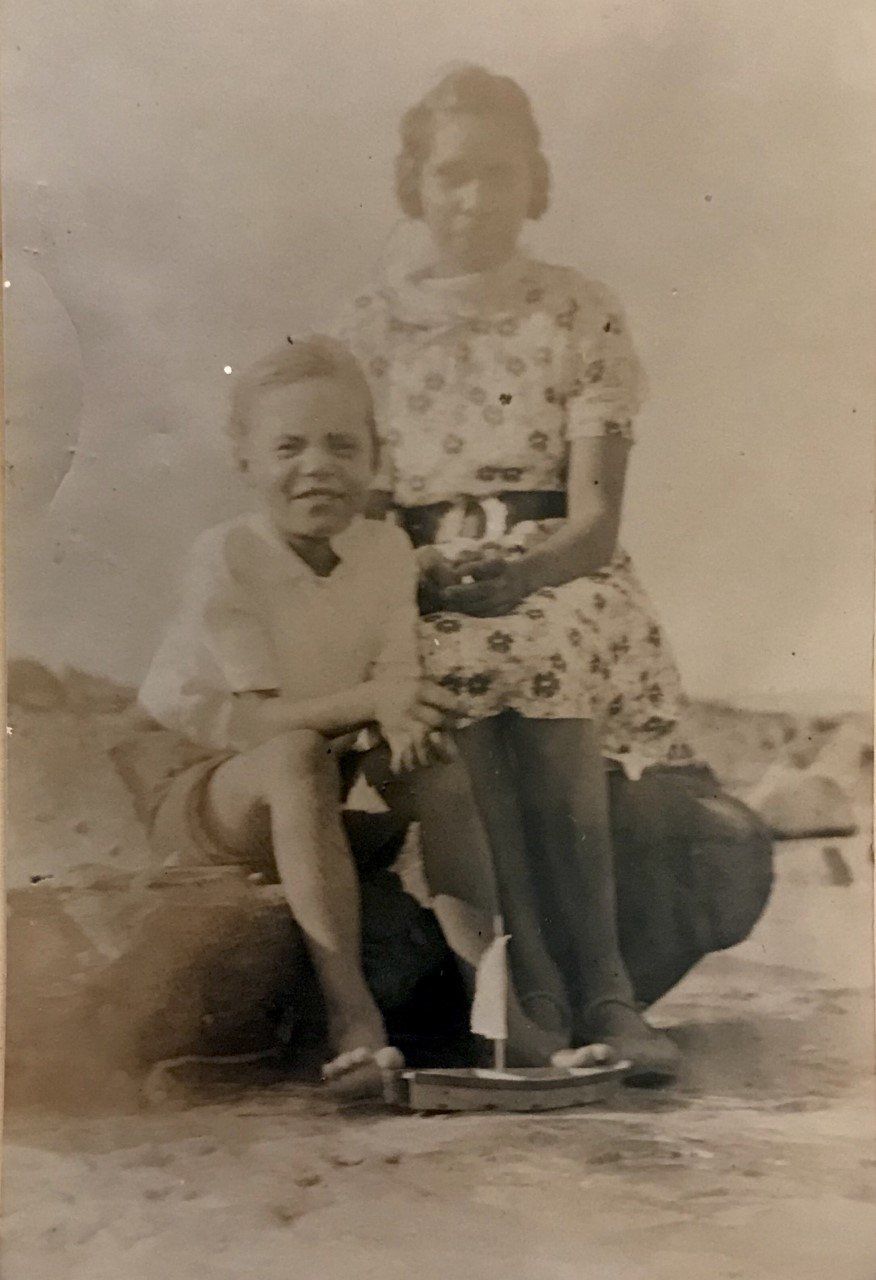
Photo: Supplied. Aunty Ruth with her mother Ruby.
Ruth has eight children, one adopted, 36 grandchildren, 72 great grandchildren and 29 great great grandchildren.
She didn’t know about her father until she was 56 years old and met all of her half brothers and sisters in Mitchell when she went back. She wasn’t able to learn the Gunggarri language of her people growing up, and is still learning about it now at 90 years old. “It’s a beautiful language,” she says.
Ruth remained connected with the dormitory girls she had grown up with. “We would only talk about life in the dorm to one another, never our children or other people. Those women are my sisters – my family.”
“Before my husband died, he told me to write about my experiences, and by doing this over the past 30 years, I have found myself.”
In Aunty Ruth’s two published books ‘Is that you Ruthie?’ and ‘Bittersweet Journey’, she recounts her personal history as one of the Stolen Generation, her married life, her dealings with the Native Affairs Department and her work in community politics and indigenous organisations. Nowadays, she continues to recount her experiences by public speaking, as an author and writing articles for Facebook.
About reconciliation Aunty Ruth says, “It has to come through acknowledgement, that’s how reconciliation will happen.”
“Acknowledging our language like naming streets after Aboriginal people, let’s do more of that, instead of naming things after Captain Cook.”
“It is important to understand the history of this country, this country belongs to Aboriginal people and we are very willing to share. We need to teach our children the stories too – I’ve got grandchildren of all colours; blue eyes, green eyes, brown eyes, red hair, brown skin - they need to know their story, it’s a shared history.”
“Reconciliation is something I love. I love to think we are reconciled with one another. I have never been an enemy with the white man. Reconciliation is people coming together, we must close this gap. Reconciliation will only come when the gap is closed. We live in a better Australia now. We have no enemies except the one we make for ourselves.”
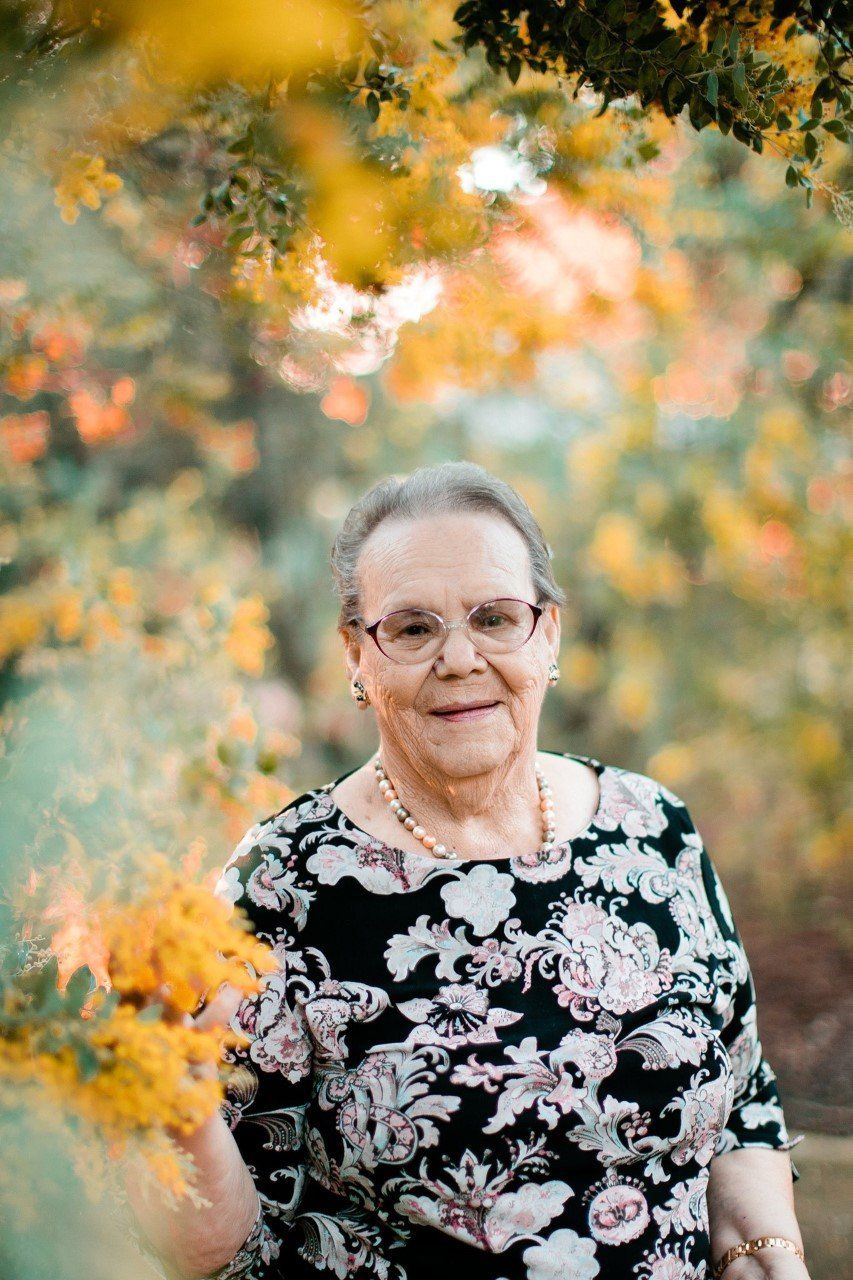
Photo: Supplied. Aunty Ruth today.

With our team working alongside landholders to turn planning into practical, lasting outcomes on the ground, our project, Protecting the Brigalow Belt in Southern Queensland , is well underway. This project supports landholders to protect remnant and fragmented Brigalow vegetation, while strengthening the long-term sustainability and productivity of agricultural systems across the region. By aligning conservation outcomes with grazing enterprise needs, the project recognises that healthy landscapes and productive businesses go hand in hand. Across southern Queensland, we are currently partnering with around 50 landholders to address priority challenges such as weeds and pest animals, alongside targeted property improvements that benefit both production and nature. Supported on-ground activities include both weed and pest management, fencing to improve grazing control and protect remnant vegetation, and infrastructure such as alternative watering points to better manage livestock access and reduce pressure on the Brigalow scrub. A key focus of the project is improving the condition and connectivity of Brigalow habitats, particularly along important corridors and remnant patches. These areas can provide critical habitat for nationally significant species including koalas, the Yakka Skink and the Northern Quoll. Strengthening these systems helps conserve threatened Brigalow Belt ecosystems while maintaining the shade, shelter, soil health and water retention benefits that are so valuable to grazing. We sincerely thank every landholder who is partnering with us on this project. Your stewardship, local knowledge and commitment are central to the success of this work. Collaboration between landholders, First Nations people, government and local communities remains at the heart of achieving lasting improvements for the Brigalow Belt, now and into the future. This project is funded by the Australian Government under Saving Native Species and delivered by Southern Queensland Landscapes, a member of the Commonwealth Regional Delivery Partners Panel.
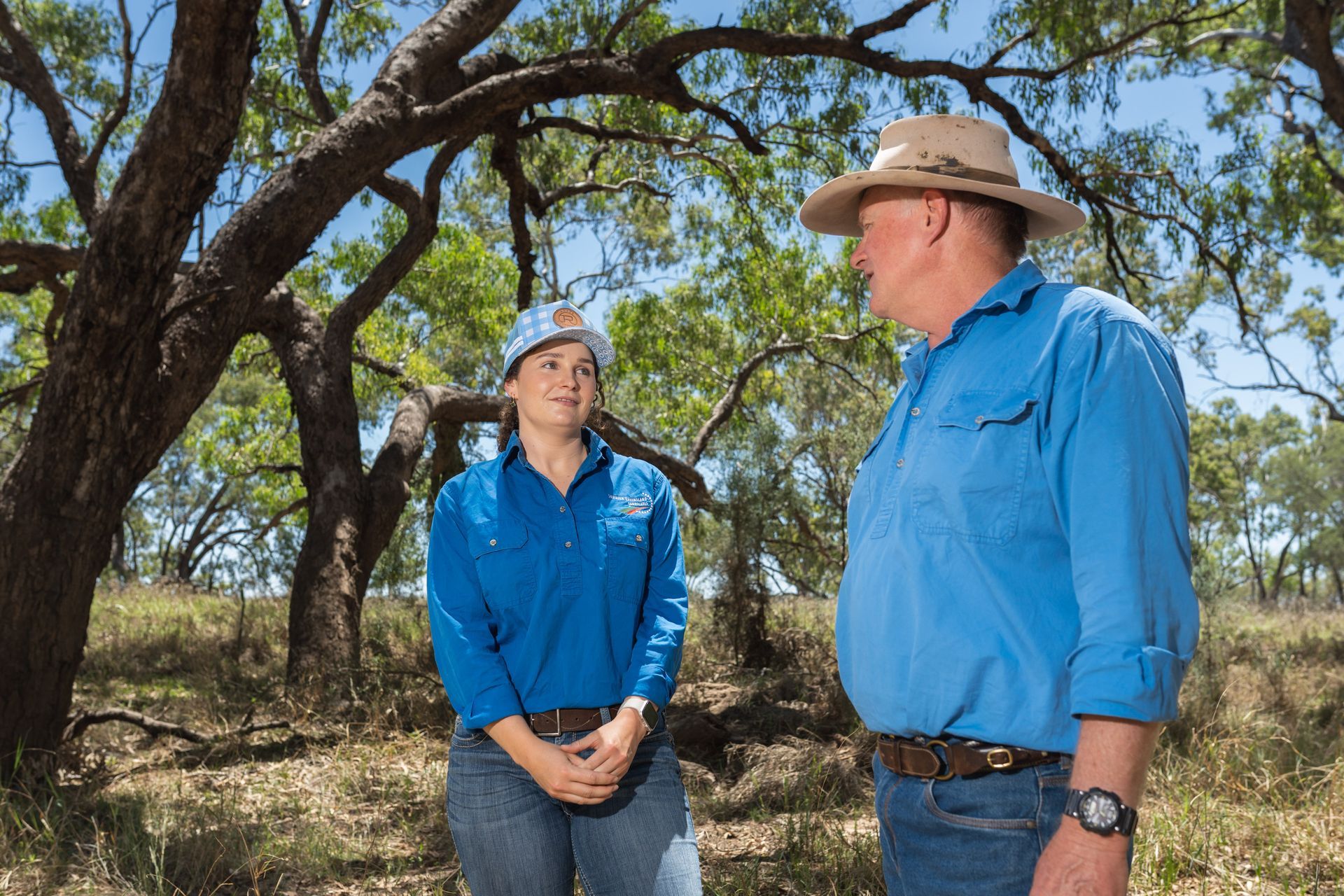
West of Augathella, along the winding Nive River, sits Biddenham , a family-owned cattle property run by Guy Newell and his wife Natalie. The river forms a defining feature of the property, supporting riparian landscapes and providing important habitat for native wildlife alongside productive grazing land. In early 2025, we approached Guy to explore opportunities to work together on landscape and biodiversity projects. At the time, our Western Koala Project was underway, alongside the Coolibah–Black Box and Poplar Box Project, both of which strongly aligned with the natural values present at Biddenham . With extensive areas of Coolibah–Black Box and Poplar Box Grassy Woodland threatened ecological communities (TEC's), particularly along the Nive River corridor, the property was well placed to support these initiatives. These TEC's also provide important habitat for native fauna including Koalas and Rufus Bettongs, with existing records and on-ground evidence confirming their presence in the area. As part of the project activities, we collected an environmental DNA (eDNA) water sample from a local waterhole to investigate the presence and abundance of native fauna, as well as potential pest species. An acoustic recorder was also deployed to help monitor wildlife activity across the site, providing valuable data to inform ongoing conservation and management efforts. A key focus of our support at Biddenham has been weed management, particularly targeting Mother of Millions and Tiger Pear, invasive species that can significantly impact native fauna and degrade threatened ecological communities. Through a combination of biological control and targeted herbicide treatments, we have worked alongside Guy to reduce these weed pressures and protect the health of the riparian corridor. Guy has also actively participated in pest management programs, taking part in the initial aerial pest control operation in May 2025, followed by a second program in November 2025. These efforts targeted feral pigs and feral cats, helping to reduce threats to native species and safeguard the ecological integrity of the TEC's along the river. Building strong relationships with landholders is central to Southern Queensland Landscapes’ work, and it has been a pleasure to collaborate with Guy and Natalie at Biddenham . Their willingness to engage in conservation projects while continuing productive land management demonstrates the value of partnership in achieving positive outcomes for landscapes, wildlife and rural communities. This project is funded by the Australian Government’s Natural Heritage Trust and delivered by Southern Queensland Landscapes, a member of the Commonwealth Regional Delivery Partners panel.
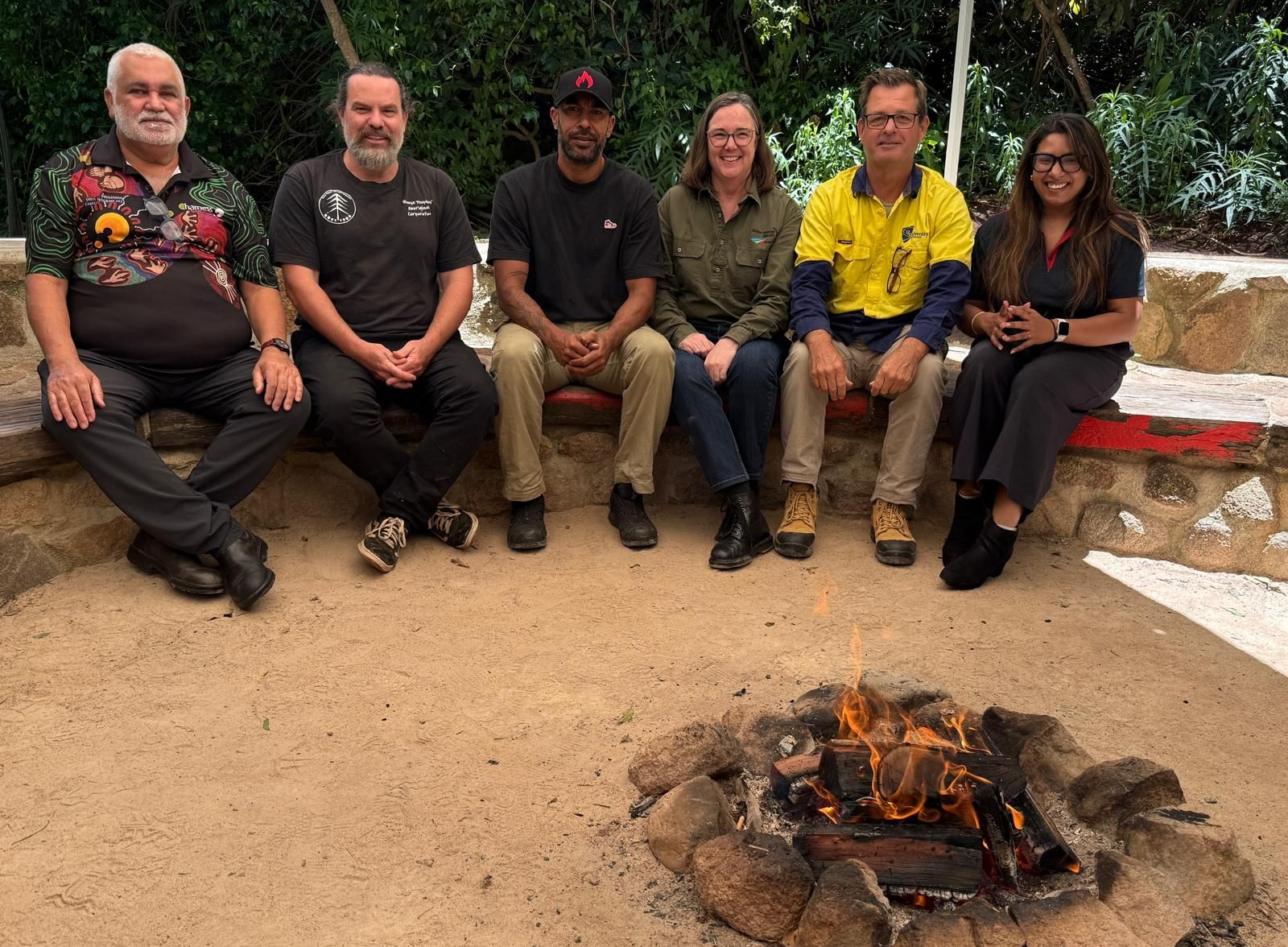
Members of the Southern Queensland Landscapes team recently spent time on Bunya Country with the Bunya People’s Aboriginal Corporation, whose work involves Healing Country and strengthening Songlines through on-Country projects and partnerships. We were grateful to be welcomed onto Country to listen, yarn and learn, and to introduce the Growing Climate Smart Grazing in the Condamine River Basin project, which forms part of the national Climate Smart Agriculture Program. Spending time together on Country created space for open conversations, allowing shared priorities to emerge naturally and respectfully. These early discussions explored healthy Country, cultural burning practices and caring for landscapes in ways that honour First Nations knowledge systems that have guided land stewardship for tens of thousands of years. By walking gently alongside Traditional Custodians, these conversations are helping shape the Growing Climate Smart Grazing program so that works will: • Respect and align with First Nations land management knowledge • Support cultural aspirations and practices • Strengthen connections to Country • Build genuine partnerships We recognise that First Nations peoples are the original land managers of southern Queensland, and their knowledge, cultural obligations and connection to Country remain vital to how we care for landscapes today and into the future. Southern Queensland Landscapes sincerely thanks Bunya People’s Aboriginal Corporation for welcoming our team and sharing wisdom and perspectives that will help guide this work.
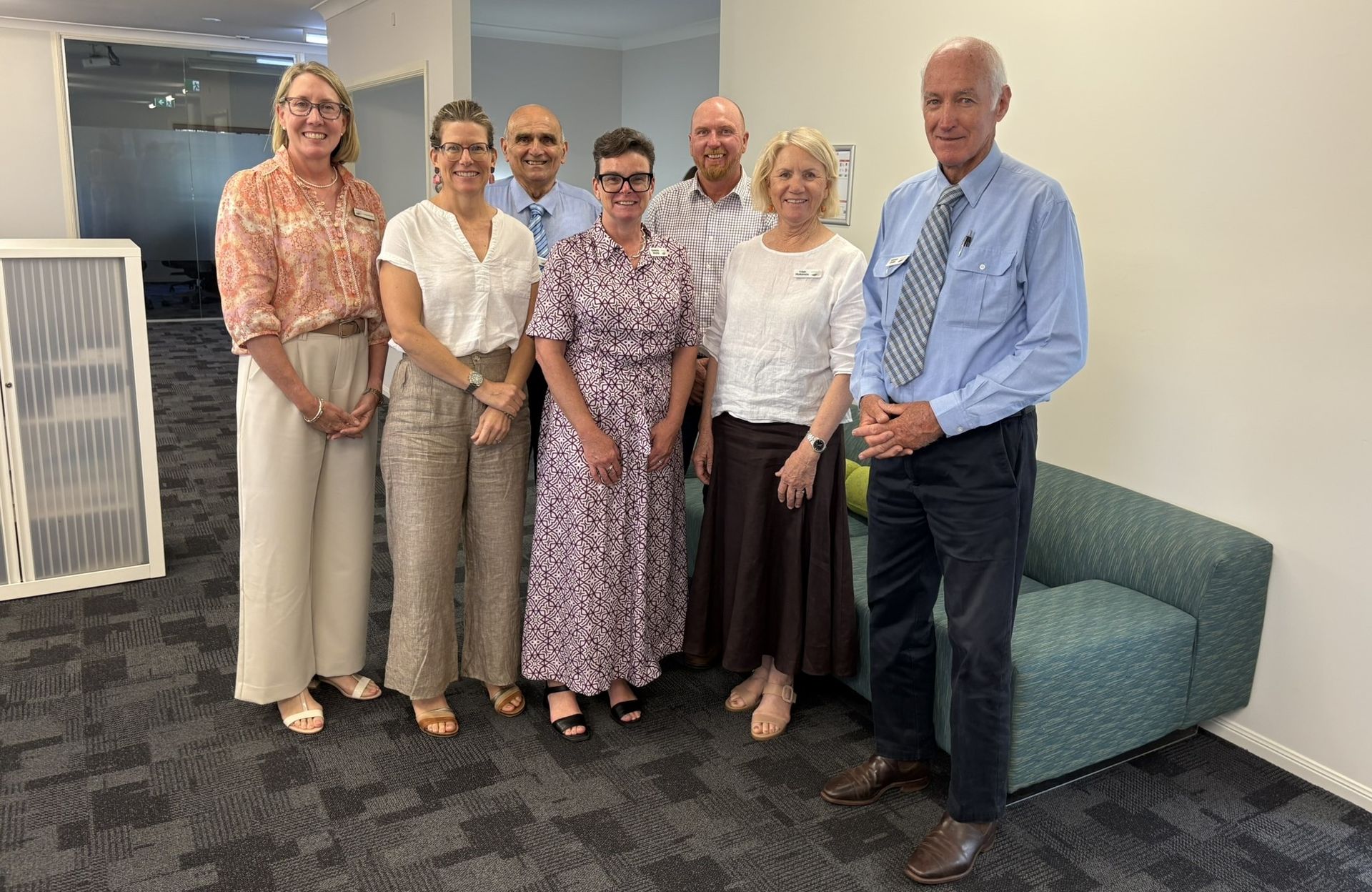
Southern Queensland Landscapes is pleased to announce key leadership changes following its 2025 Annual General Meeting, including the appointment of Anthony Glasson as the organisation’s newest Board Director. Anthony, who operates Picarilli Merinos near Thargomindah, brings broad experience in primary production, regional leadership and natural resource management. His long-standing involvement in rural industries and commitment to sustainable land stewardship will be pivotal in supporting Southern Qld Landscapes delivery under its NRM Regional Plan, Flourishing Landscapes, Healthy Communities . Southern Qld Landscapes also confirms the reappointment of Directors, Louise Winten from Morven and Pippa Jones from Goondiwindi. Both Directors bring substantial governance experience and strong regional perspectives, and their renewed terms will continue to support their commitment to community-led outcomes. Additionally, Southern Qld Landscapes acknowledges the contribution of retiring Director Hollie Grimwade, whose service has strengthened their strategic direction and regional engagement. Board Chair, Kimberley Swords said “these appointments reflect the stability and capability of Southern Qld Landscapes governance and the organisation’s strong focus on delivering real outcomes for our communities.” In welcoming and recognising the Directors, Ms Swords said: “I am very pleased to welcome Anthony Glasson as a new Director of Southern Qld Landscapes. Anthony brings a wealth of practical knowledge from his leadership of Picarilli Merinos and a deep commitment to our region. His understanding of land stewardship and his passion for community-led change will be invaluable. I also congratulate and warmly acknowledge the reappointment of Directors Louise Winton and Pippa Jones. I also want to sincerely thank our retiring Director, Hollie Grimwade. Her commitment, professionalism and regional understanding have been significant assets throughout her tenure.” “I would also like to acknowledge our dedicated staff, who continue to deliver meaningful outcomes for landholders, partners and communities. This year, we delivered more than $9 million worth of project activity across the region, with on-ground and in community work to support sustainable agriculture and build community resilience,” said Ms Swords. Members also voted at the AGM to adopt a new modernised, constitution in line with contemporary not for profit governance expectations. Southern Qld Landscapes looks forward to working under its renewed Board leadership to advance regional priorities, continue strong partnerships, and deliver tangible benefits across the Southern Queensland region.
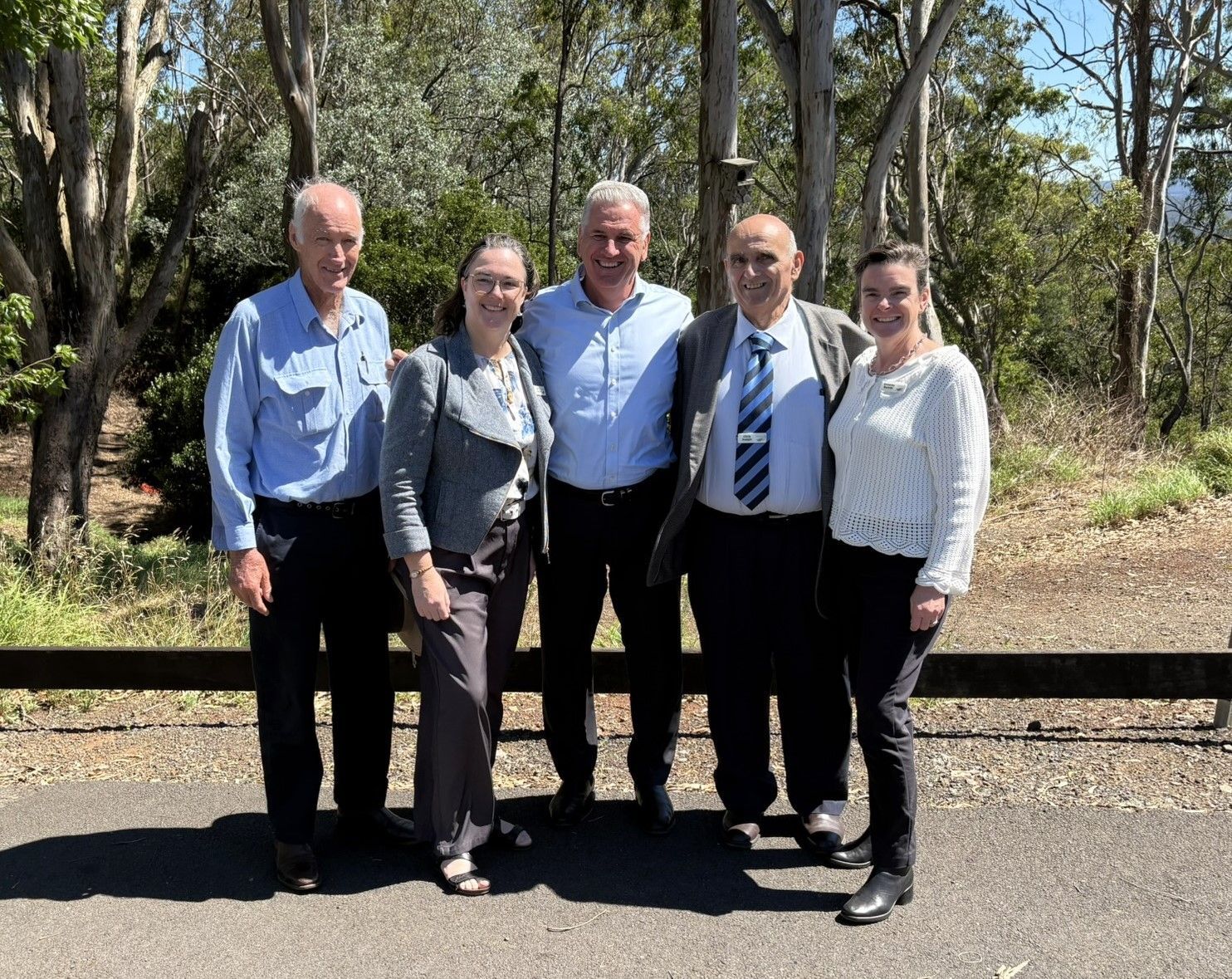
Southern Queensland is set to benefit from a major investment in Queensland’s natural assets, with more than $9 million allocated through the Queensland Government’s Natural Resource Management Expansion Program and delivered by Southern Queensland Landscapes. Southern Queensland Landscapes will receive $6.6 million to work with landholders to improve more than 124,000 hectares of land and vegetation adjacent to key waterways by installing fencing and watering points to better manage grazing. A further $2.5 million is allocated to the improvement of priority koala habitats and support animal movement and survival across Southern Queensland. This targeted action to remove key threats including wild dogs and invasive cactus species. Southern Queensland Landscapes CEO, Gillian Meppem said “the investment highlights the vital link between healthy landscapes, productive agriculture, resilient koala populations and thriving waterways.” “We are looking forward to delivering two key projects in partnership with landholders, through the Natural Resource Management Expansion Program. These projects are focused on protecting our waterways through improved grazing management and supporting thriving koala populations across Southern Queensland.” “Better grazing management, strategic fencing, and improved stock water infrastructure will enhance ground cover and protect waterways, ensuring our landscapes are more capable of resisting and recovering from natural disasters and the impacts of a changing climate.” “We are improving koala habitat by tackling key threats such as wild dogs and invasive cactus and supporting greater genetic diversity to ensure thriving koala populations across southern Queensland,” she said. Minister for Natural Resources and Mines, Manufacturing and Regional and Rural Development, The Honourable Dale Last, said “the funding demonstrates the Queensland Government’s strong commitment to supporting regional communities and natural resource management.” “When we came into government, we promised we would double funding for NRM organisations, and we would ensure our regional workforce would benefit, and we are delivering on that promise. “These NRM organisations are leading the way in safeguarding our natural resources, and that’s why we’re proud to support them and invest in Queensland’s future.” The NRMEP is a partnership between the Queensland Government and NRM Regions Queensland to deliver $117.84 million in on-ground land, water and biodiversity programs over the next three years.
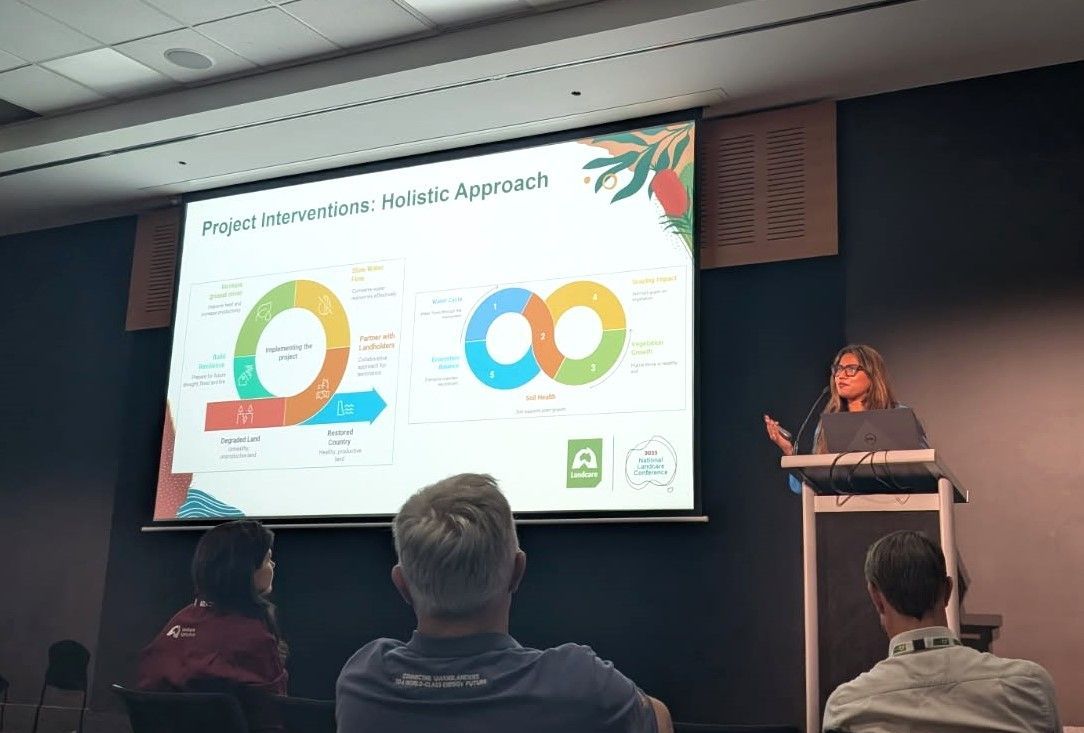
We are seeing fantastic momentum across the region, with strong interest from landholders in improving land condition. Even better, clusters of neighbouring properties are getting involved, a promising sign for achieving landscape-scale change that supports water infiltration, soil health, and resilient groundcover. To help visualise this, Projects Lead Payel Sinha, developed a set of clever graphics that capture the essence of the NRRP program. The circular diagram below shows how water, soil, vegetation, grazing, and ecosystem balance are interconnected, all working together to support healthier landscapes.
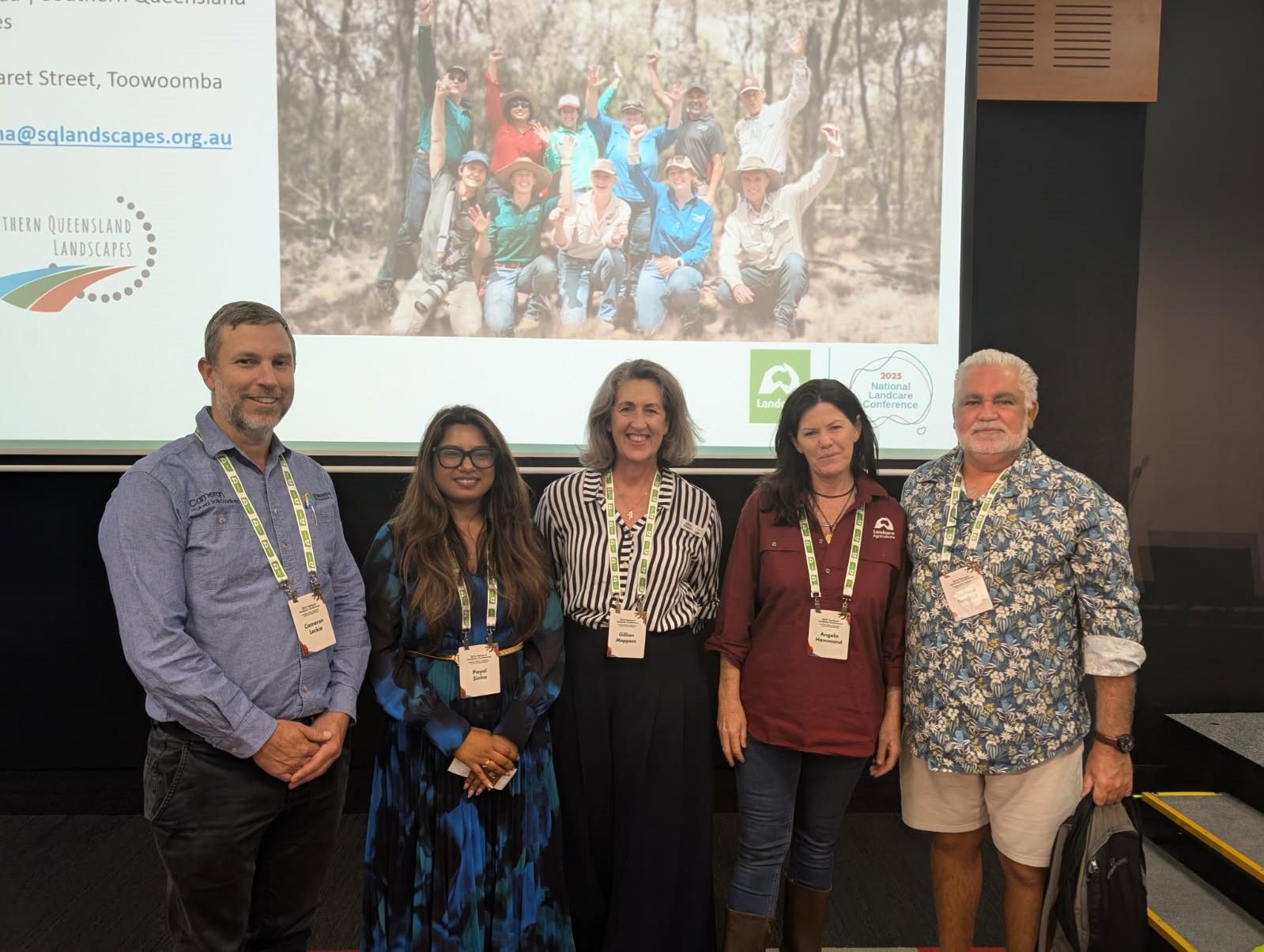
We were honoured to have CEO Gillian Meppem, Richard Turnbull, Dr Payel Sinha and Uncle Kevin, a Margany Elder from near Quilpie, come together on the Gold Coast for this year’s Landcare Conference, representing our vision, work and cultural partnerships across the region. Dr Payel Sinha delivered a presentation on the Natural Resource Recovery Program: A Holistic Approach to Restoring Landscapes , showcasing how integrative, place-based strategies can unite ecological health, cultural values and community resilience.
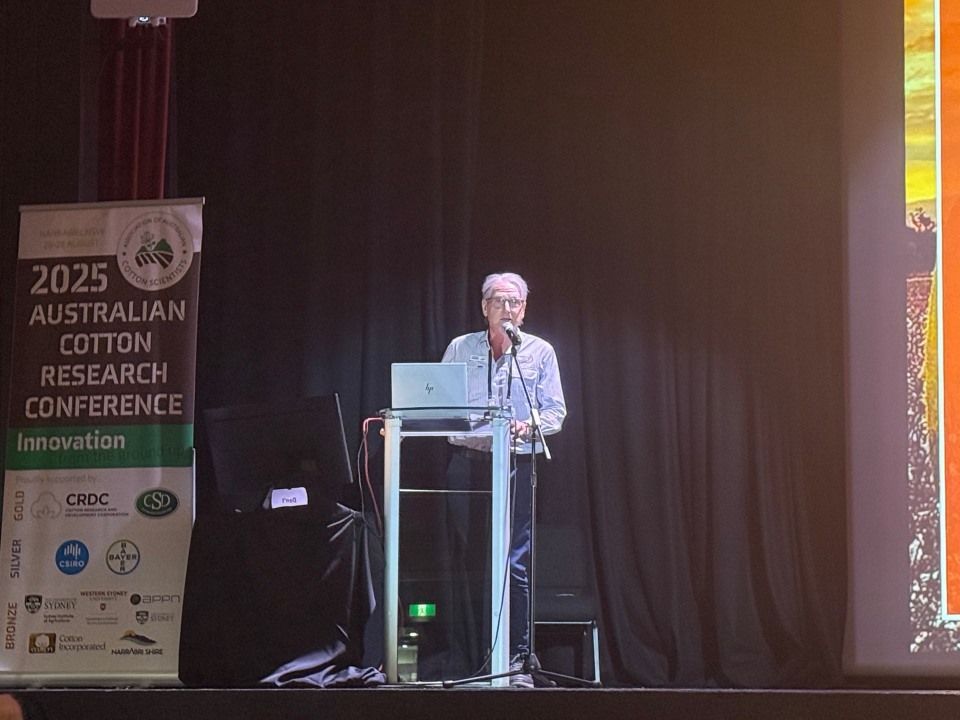
The rapidly evolving global market for agricultural commodities, including cotton, was front and centre at the recent Australian Cotton Research Conference held in Narrabri, NSW. A key theme throughout the event was the increasing pressure climate change places on cotton production and how the industry is adapting through innovation and research. Andrew Davidson of Southern Queensland Landscapes introduced an innovative national project funded by the Cotton Research and Development Corporation (CRDC). The project focuses on mapping woody vegetation across cotton farms in Australia, a crucial step toward better understanding on-farm biodiversity and supporting sustainability goals. The project uses a cutting-edge methodology developed by Southern Queensland Landscapes, drawing on a national dataset curated by the Terrestrial Ecosystem Research Network (TERN). What makes this approach unique is its ability to consistently measure vegetation across state and territory lines, overcoming long-standing challenges caused by fragmented and inconsistent regional datasets. The initiative is a true collaboration between the cotton industry, Natural Resource Management (NRM) groups, and NRM Regions Australia. Together, they aim to build a national picture of woody vegetation cover, including how much of it connects to larger, regional biodiversity corridors. Why It Matters... This vegetation data will provide a scientifically robust and cost-effective indicator of potential biodiversity on cotton farms. In practical terms, it can help: • Support cotton growers in meeting environmental standards for market access • Inform risk management strategies and conversations with financiers • Align with international frameworks such as: - The Science-Based Targets for Nature - The Post-2020 Biodiversity Framework - The Taskforce on Nature-related Financial Disclosures (TNFD) As the cotton industry looks to remain competitive and resilient in a changing climate, initiatives like this are critical. They help position Australian cotton as a globally trusted, environmentally responsible product.
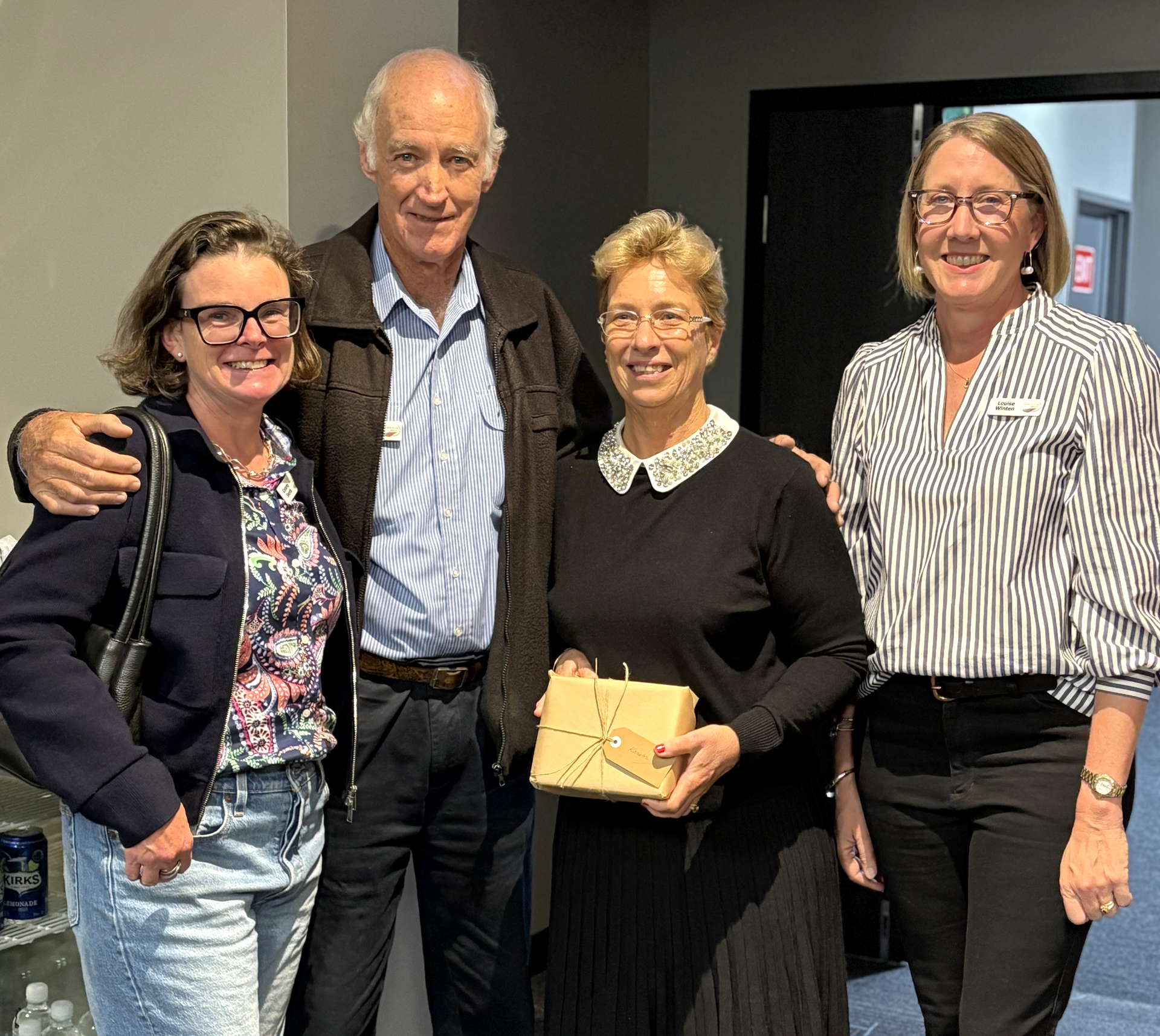
A Message From Our CEO, Gillian Meppem
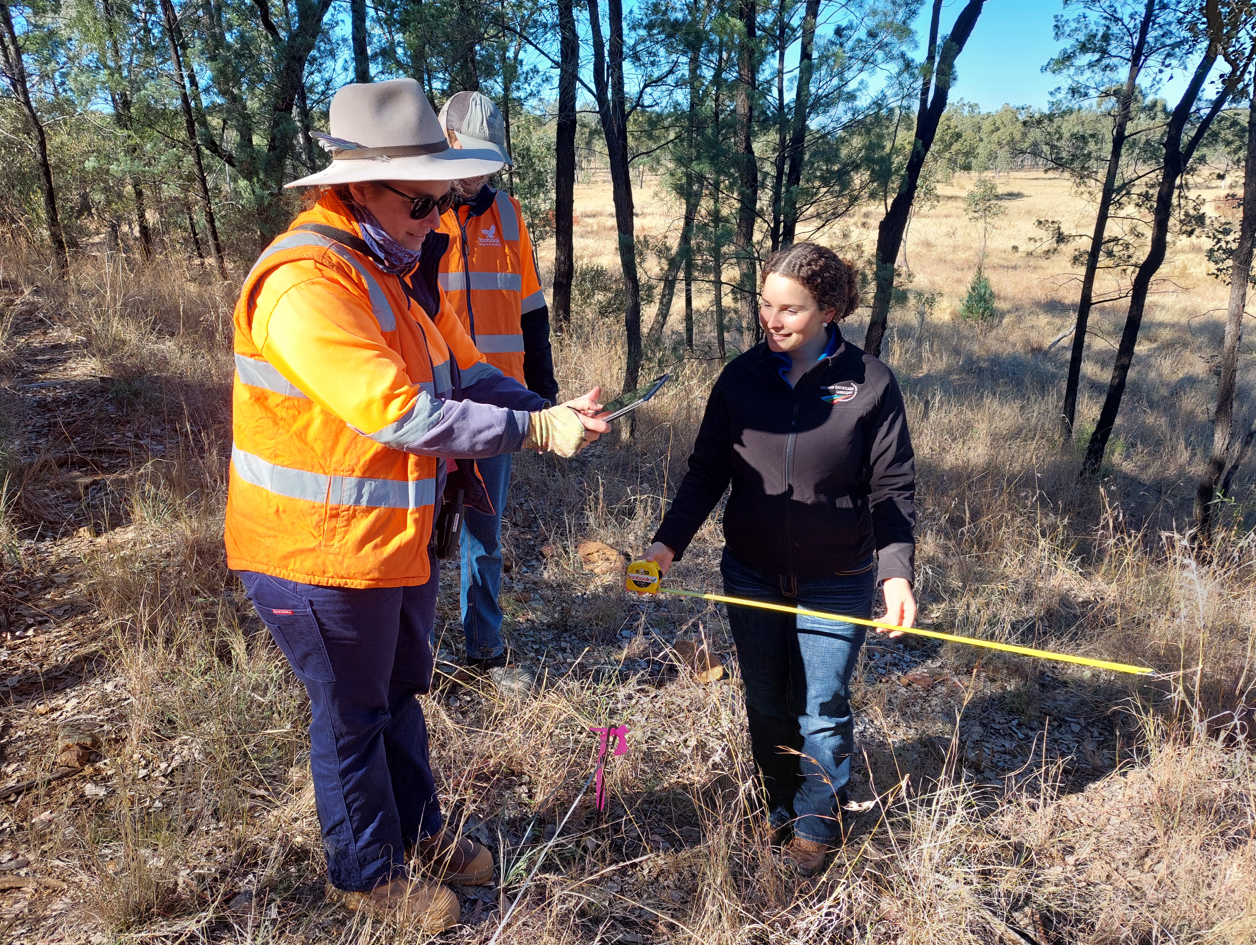
Project Officers Katrina Higgins and Erin Landsberg recently joined Rose and Weston from Boobook Ecological Consulting in Roma, to complete field monitoring in the Murweh and Maranoa districts. This monitoring measures the value and health of Coolibah, Poplar Box, and Brigalow habitat. During this time, we deployed acoustic recorders and motion-sensor wildlife cameras, and took DNA samples from nearby water sources to ascertain the fauna within these threatened habitats.